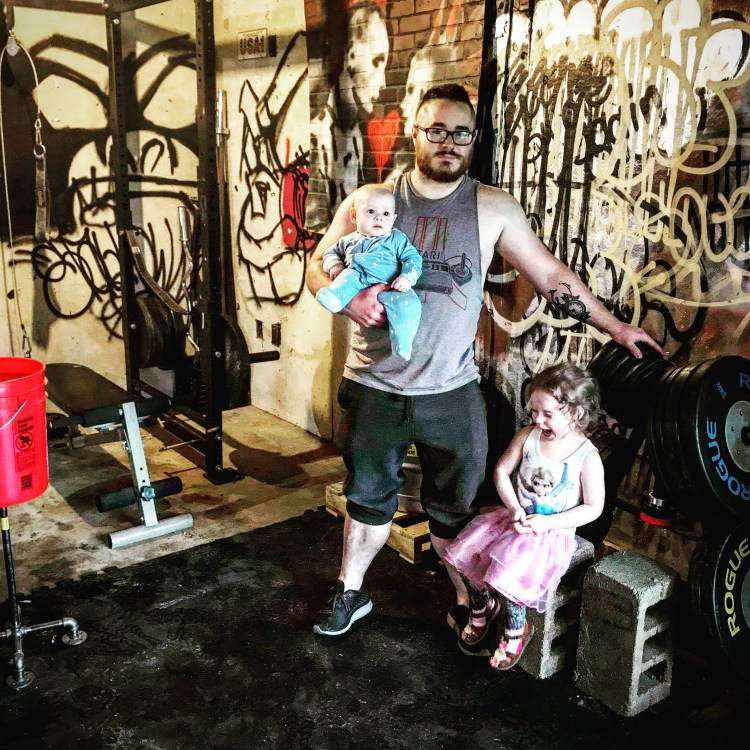
My home gym has gone through several iterations. What started out as a few Five-Below weights in a spare bedroom has grown into hundreds of pounds of plates, barbells, racks, and a mostly dedicated building on our property. Throughout I juggled what equipment I need versus what equipment I simply wanted to have, how much space I needed for certain gym activities, and the concerns of the other people using my home gym.
I will open this up by saying that I still have a membership to a gym despite owning a home gym. Many resources online will go into the detail of how a home gym will save you on gym memberships and help to keep you on track. My situation is a little different. As an athlete competing in strongman, the events I am preparing for are constantly changing. To own all the equipment would be both monetarily staggering and space consuming. I also have an incredible coach who is well versed in the sport, both holding world records herself and having produced state and national recordholders. The needs of my home gym are simple, a place to be able to lift heavy weights when my day job precludes me from going to the gym.
The current space takes up about two thirds of the barn on my property. The last third is still reserved for some storage items for the family and the necessary workspace of somewhat rural living. I will not be going into what you need to have your own home gym, but I will talk about what has worked well for me in the space that I have for the needs that I have. I have broken this down into two portions. I will talk about the basics and then I will go into detail about the more specialty side of my home gym at a later date.
THE BASICS
The primary consideration with a home gym is usually function. You need to be able to use the space. If the space will not be dedicated, you may need to consider what other purpose the space will serve when you are not training. One of the biggest factors for moving from the spare bedroom to the barn had to do with exactly this. My daughter’s bedroom shared a wall with my gym space and that meant no music, no dropped weights, and quiet training in the early morning hours so she was not awoken by her dad building muscle. This also regained what was at the time the spare bedroom to become my son’s bedroom when he was born. There was no way I could share a training space with an infant sleeping in a crib.
The barn on my property gave me the much-needed solitude to lift when my schedule permits, usually early morning hours and late nights. With a concrete floor covered in horse stall mats dropping weights would not be an issue and the seclusion of our property meant that I could play my music without disturbing neighbors or the family inside. There was another space consideration that was addressed by the barn that I had previously not considered, vertical height.
Are you training overhead presses? Consider commercial gyms. Their lofty ceilings make it easy to raise weights over your head standing on your feet. If you are training for strongman, chances are you will encounter overhead presses and you will need to train for them. Make sure you are not going to punch a hole through your ceiling.
Floorspace grew slowly as we as a family figured out what we needed. For a long time, I was happy to have just a couple of feet around my rack on all sides. In our current iteration we have about an eight foot by fifteen foot of open floorspace. This gives my wife and I the ability to both be in the gym together and not be tripping over weight trees, racks, and barbells. A power rack against the backwall and the squat rack in front of the garage door keeps the flooring open and frames the space nicely. When you step inside you know you are there to put in work.
Comfort is an odd thing to think of in relation to a home gym. Because my home gym is inside a barn space it can become sweltering hot in the summer and frigid cold in the winter. Having a garage door to open with a box fan makes all the difference in the summer. A small space heater along with an extra layer of clothes makes winter training far more bearable also. If I were to tear down the building and start over I would have changed the layout but I am satisfied with what I have from when we move in.
Notice I still have not mentioned equipment? That is because basic can be very basic. Space for bodyweight movements comfortably might be all you need. If you are going to have any equipment whatsoever you will need to figure out storage. Plates are stored on a weight tree and on the rack in our home gym. Bands and chains are hung on the walls. Our bench goes against the wall when not in use. Bars are stored upright and off the main floorspace. I even went so far as to move a wire shelving unit into the gym to hold changes of shoes, drinks, gym bags, and children’s activities when not in use. We maintain as much usable space as possible.
Now the basics of equipment. If you are going to be weightlifting, you need weight and usually a lot of it. I will give this word of caution; our plates were purchased pre-quarantine and I have seen some absolute gouging in the resale market since. The bulk of my plates were used when I purchased them. I was able to build a significant inventory of weights through Facebook Marketplace, used sporting goods stores, and directly from gyms themselves! Many gyms lease equipment but it never hurts to be friendly with other local gym owners. When they outgrow the use for something you might get it offered to you!
I also have a second secret to affordable gym equipment. Buying direct. I am fortunate enough to live less than thirty minutes from York Barbell. As a major manufacturer of weight lifting equipment for decades they still operate a showroom and sell directly to the public. They run different deals in the store than online, and it pays to check out what is going on. Not to mention you can see the equipment before you purchase, which can save headaches down the road, networking with the staff and other lifters is a major advantage itself.
Regarding equipment it also pays to be creative sometimes. Paying for chains from a weightlifting company may not be as cost effective as buying chain from hardware stores or even salvaging some from a friend or neighbors garage. Tow straps can be had for less than a fancy suspension system and depending on what you are using them for it might work better in the long run. Sandbags are essentially that, a bag of sand. Axle bars are cool, but schedule 40 pipe is 1.9” in diameter also and available in different lengths. If cost is a concern, keep in mind what a creative solution may be.
 CULT-OF-IRON